The New Forest is a place to watch wild deer, with woodland walks and clearings where a patient visitor may see them. Plan a walk you will enjoy even if the deer stay out of sight. This guide covers where to look, what you might recognise and practical details for a visit.
Planning a trip to Bolderwood? Forestry England now says there is no longer a deer sanctuary or feeding station there. The Deer Watch Trail remains listed, but older feeding-time advice should not be used to plan your day. See Bolderwood's current arrangements below.
Where to see deer in the New Forest
Woodland edges and clearings are useful places to watch quietly from an established track. The National Park Authority describes fallow as the Forest's most commonly seen deer and notes that roe may feed around woodland edges early in the morning or evening. Its local deer guide explains their habitats.
Bolderwood, near Lyndhurst, offers a waymarked short walk to a viewpoint across woodland and meadows. Treat it as a woodland visit with a chance of wildlife, rather than a scheduled deer encounter. Forestry England's Deer Watch Trail gives the route details.
For a visit to an animal attraction, the New Forest Wildlife Park lists red deer among its animals. That is a different experience from looking for free-roaming deer. Check the park's visitor information for admission, opening times and access before travelling.
These locations are independently operated. Wellow provides this guide for visitors; bookings and site enquiries belong with the relevant operator. For sightings elsewhere in the county, see our Hampshire deer identification and landowner guide.
Bolderwood deer sanctuary and feeding times
Is there still a deer sanctuary at Bolderwood?
No. Forestry England's current information says the sanctuary and feeding station are no longer there. The familiar name still appears in visitor guides, but it does not describe the present arrangements. This does not mean that Bolderwood itself is closed or that wild deer cannot be seen in the surrounding forest. Check the operator's current notice.
When are the deer fed?
Do not plan around the old summer feeding schedules: there is no longer a feeding station. Bring binoculars and allow time to watch quietly, without expecting deer to gather at a particular hour. Do not bring food for wildlife.
How long is the Deer Watch Trail?
Forestry England lists a 0.75 km (0.5 mile) circular route, taking about 15 minutes to walk. Follow the yellow waymarkers. The path has a moderately smooth gravel surface, gentle slopes, a gate with a low catch and benches along the way. Allow extra time for stops. Trail and access description
Parking, toilets and access
Bolderwood is on Ornamental Drive near Lyndhurst. Forestry England lists toilets, picnic space and accessible parking spaces. Parking charges apply; use its Bolderwood visitor page for current prices, payment arrangements, directions and access information.
For a wheelchair or pushchair visit, compare the surface, slopes and gate details with your needs before setting off. A short distance alone does not establish that a route will suit everyone. Park in the designated car park and keep gateways and verges clear.
Which New Forest deer have you seen?
The Forest has fallow, roe, sika, red and small numbers of muntjac, according to the National Park Authority. Compare several features together: size, body shape, rump, tail and antlers when present. These reference photographs show species, not guaranteed sightings at a particular location.
Fallow deer
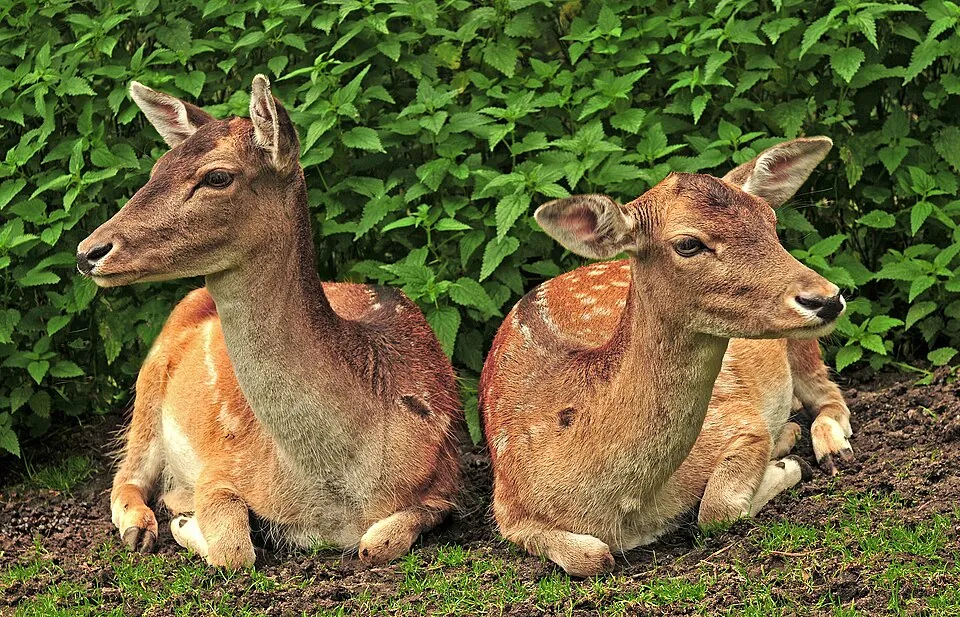

Look for a relatively long tail with a dark stripe; mature bucks have broad, flattened antlers. Fallow coats vary, so an animal need not have the familiar spots. Compare the fallow deer identification profile.
Roe deer
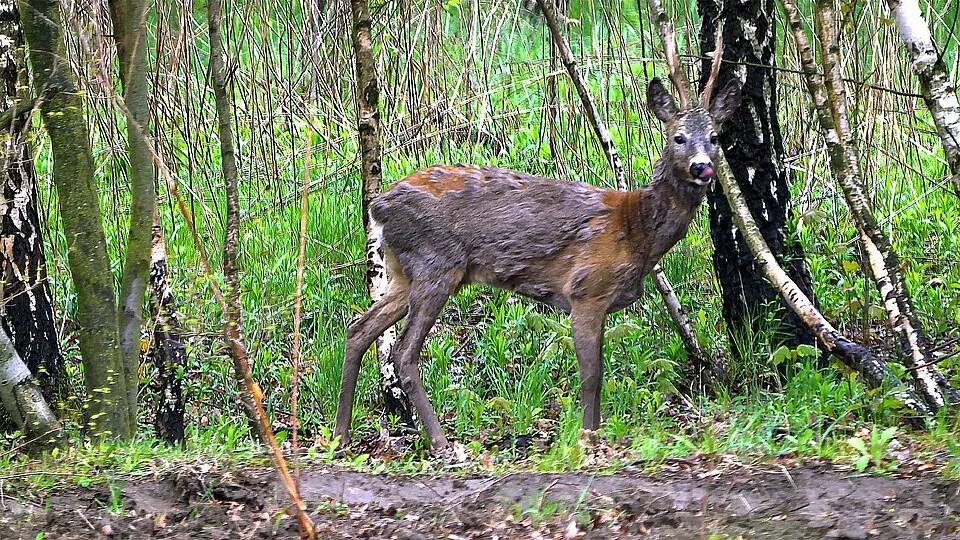

A pale rump and no obvious tail help distinguish roe. Bucks usually have short antlers with three points on each side. See the roe deer photograph and description.
Sika deer
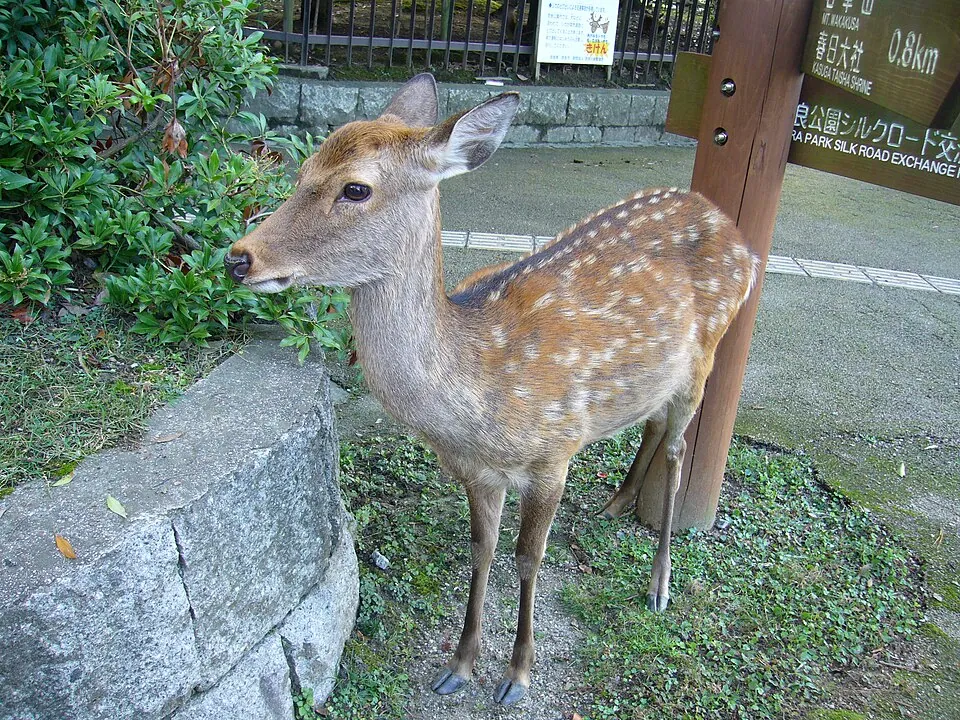

Sika can also have a spotted summer coat. Look at the rump and tail rather than relying on spots: the pale rump is bordered in black, while stags have pointed rather than flattened antlers. Compare the sika identification profile.
Red deer
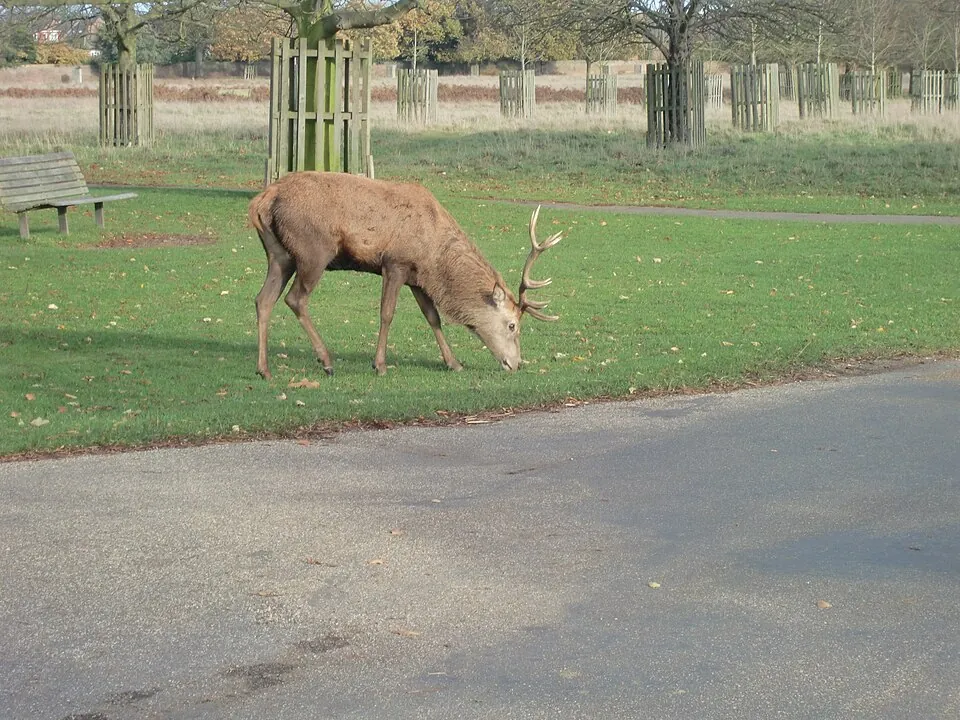

Red deer are Britain's largest wild deer. Mature stags have branching antlers; size, shape and rump markings also matter when identifying females or animals without antlers. See the red deer profile.
Muntjac
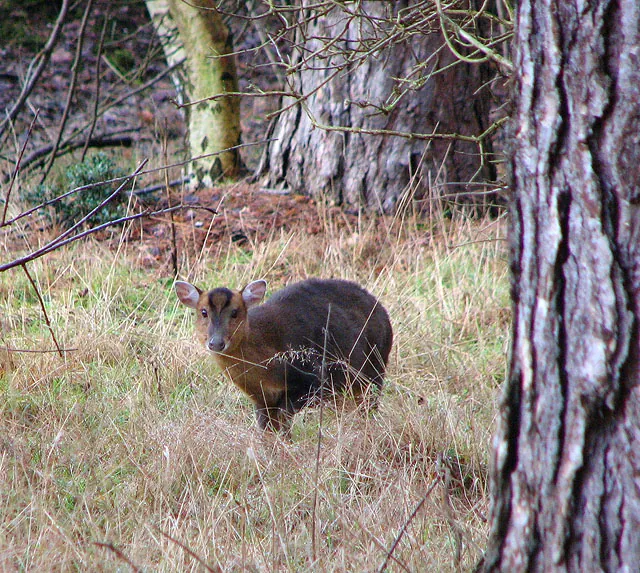

Muntjac have a small, hunched outline and dark facial markings. Bucks have short antlers. Use the muntjac profile to compare features rather than identifying a distant deer by size alone.
The linked profiles include British Deer Society sources and further photographs. For a side-by-side reference, use our UK deer identification comparison.
What are the white deer in the New Forest?
Fallow coats can range from dark to white. A pale deer should not automatically be labelled an albino or a separate species. Compare its other features and use the National Park Authority's fallow description alongside the photographs above.
Best time to see deer and the New Forest rut
There is no reliable appointment with wild deer. Early morning or evening can be useful for watching roe at woodland edges, but weather, disturbance and cover affect what you see. Choose a route with suitable access and enough daylight for your return.
The rut is the mating season. Timing differs between species:
- Red deer: Forestry England describes the New Forest rut as September to around early November. Stags may roar, display and compete with other males. Local red deer rut guidance
- Fallow deer: the rut is usually in October–November. British Deer Society: fallow identification leaflet (PDF)
- Sika deer: generally late September–November. British Deer Society: sika
- Roe deer: mid-July to mid-August, rather than autumn. British Deer Society: roe
- Muntjac: breed throughout the year, without a defined annual rut. British Deer Society: muntjac
For a wider seasonal reference, our UK deer cheat sheet compares ruts and birthing periods. These are typical periods, not dates for a scheduled visitor event.
During the red deer rut, Forestry England asks visitors to keep 100 metres away, remain on main tracks and respect signed quiet areas. Keep dogs on a lead near deer conservation areas. Watch through binoculars rather than approaching for a photograph. Never surround deer or follow them into cover. Read the current rut viewing advice before a visit.
Deer walks with children, dogs and binoculars
For a family visit, choose the route for its walking distance and facilities, and make any deer sighting a bonus. At Bolderwood, the short trail and benches offer places to pause; check the access details above if taking a pushchair. Children can compare a distant animal's outline with the photographs without needing to get closer.
Dogs are allowed at Bolderwood, according to Forestry England's visitor information. Keep them under close control, follow signs and use a lead where necessary to prevent them approaching or chasing wildlife. An animal attraction may have different dog rules: check its own visitor information.
Do not feed or touch wild deer. Stay on main tracks, keep your distance and take litter home. The New Forest Code explains how to protect wildlife and the people and livestock sharing the Forest.
Bring binoculars, suitable footwear and a route you can follow without leaving marked paths. Check the operator's current access notices before travelling, particularly if facilities or a short accessible walk are essential to your plans.
Deer on your own land
If your interest comes from deer around a garden, woodland or field, start with our Hampshire deer guide and guide to recognising deer damage. They explain what to record before discussing management. Wellow's deer management service sets out the help available to landowners.