Sika deer are part of the wildlife of Poole Harbour and Purbeck. The RSPB records them at Arne, while Dorset Wildlife Trust describes sika on Brownsea Island. These are useful local examples, not a guarantee of sightings or a species list for every Dorset property.
This guide focuses on eastern Dorset's harbour, woodland and heathland setting. For the neighbouring county, use our Hampshire deer identification guide; for all six British species, see the UK deer reference.
Recognising sika deer
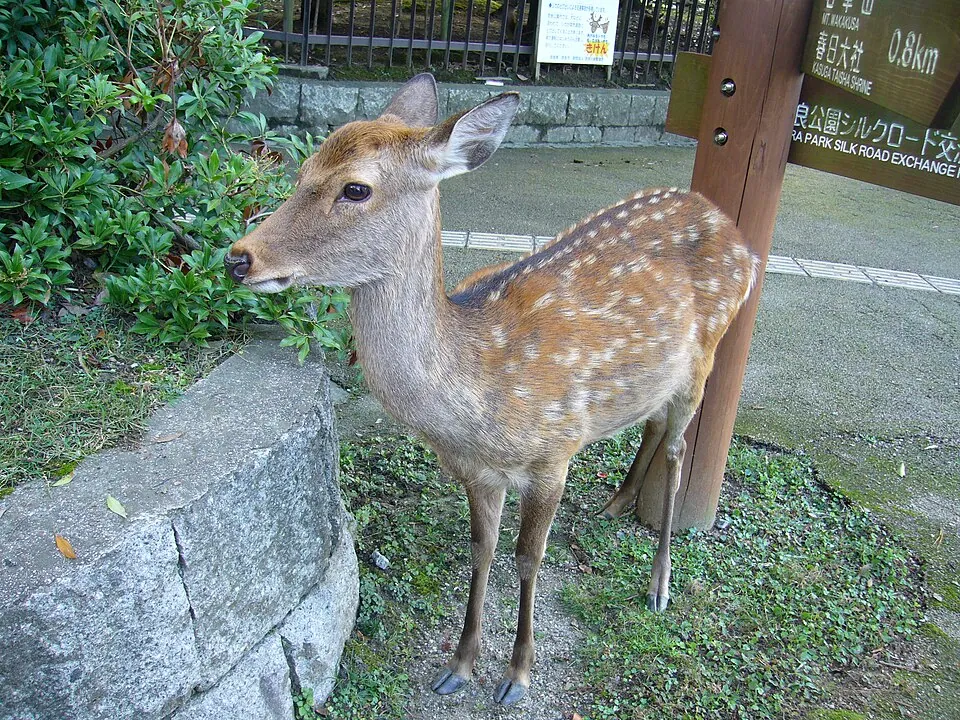

This reference photograph was taken in Japan, not Dorset. Sika's spotted summer coat can look quite different from the darker winter coat. Look for the pale rump, shorter tail and conspicuous pale glands on the hind legs, rather than deciding from spots alone. The British Deer Society's sika account explains these features and the species' association with coniferous woodland and heath.
Sika, fallow or roe?
Swipe the table sideways on a small screen, or focus it and use the arrow keys.
| Feature | Sika | Fallow | Roe |
|---|---|---|---|
| Tail and rump | Short tail; pale rump bordered in black | Longer tail with a dark stripe | Pale rump; no obvious tail |
| Coat | Often spotted in summer, darker in winter | Several colour forms; spots are not always present | Reddish summer coat, greyish winter coat |
| Mature male's antlers, when present | Pointed branches | Broad, flattened palms | Short, usually three points on each side |
Use several features together: females and males without antlers need other clues. This is an identification comparison, not a claim that all three occur at each reserve. Compare the photographs and sources in our UK species guide.
Where to look around Poole Harbour
Arne: a mainland reserve visit
RSPB Arne combines heathland, woodland, fields and harbour habitats. Its reserve guide describes sika stags rutting in the farm fields. Follow the waymarked trails and watch quietly from a distance; the presence of deer does not mean they will be visible on your visit.
Dogs must be on short leads on the designated dog-friendly routes. Some trails have different restrictions, so check the RSPB's current access information and maps before choosing a walk. Use that page for opening hours, facilities and parking arrangements too.
Brownsea Island: plan the crossing first
Dorset Wildlife Trust identifies sika among the wildlife of Brownsea's reedbeds and alder carr. An island visit needs more planning than a mainland walk: check the ferry, admission and seasonal opening arrangements before travelling. Assistance dogs are permitted; pet dogs are not.
The Trust manages part of the island in partnership with the National Trust. Membership and admission arrangements differ, so do not assume that membership of one organisation covers every part of the visit. See Dorset Wildlife Trust's Brownsea visitor information for transport and access details, including arrangements for visitors needing accessible transport.
Wellow does not operate these reserves or provide their visitor services. Contact the operators about access, bookings and facilities. Neither destination offers a guaranteed wild-deer sighting.
Watching without disturbing deer
Choose a route for the landscape as well as the chance of wildlife. Stay on permitted paths, use binoculars and allow animals space to move away. Do not feed deer or follow them into cover. Follow local signs and dog restrictions, particularly where paths cross sensitive habitats.
For a seasonal reference, see our deer rut and birthing calendar. A rutting season is not a visitor timetable: opening hours, transport and wildlife behaviour still determine what is practical. Our New Forest visitor guide covers a different nearby landscape and its own access arrangements.
Deer and young trees in Purbeck
Deer are also relevant to the success of new habitat. In its Purbeck wood-pasture restoration project, the National Trust describes protecting saplings from grazing animals, particularly deer. This is the Trust's work, not a Wellow project.
For a landowner, the useful question is what is happening to the plants you want to establish. Record repeated browsing, affected areas and changes over time alongside sightings. Our deer damage guide helps you collect that evidence without assuming every damaged plant was affected by deer.
Advice for landowners in eastern Dorset
Wellow's confirmed service area includes eastern Dorset; see areas we cover. Our deer management service covers roe, fallow and muntjac. This guide's sika information does not extend that stated service scope.
If you need help with your land, describe the location, habitat and damage, including any uncertain species identification. We can discuss whether the work fits our services. Reserve visitor enquiries should go directly to the operators linked above.